Meet the award-winning novelist Elif Shafak
Elif Shafak has been described as ‘one of the most distinctive voices in contemporary Turkish and world literature’. She is an advocate for women’s rights, LGBTQ+ rights and freedom of expression. Below, Shafak shares her thoughts on the importance of books, best writing advice, and some suggested reads to add to your queue.
Elif Shafak's books





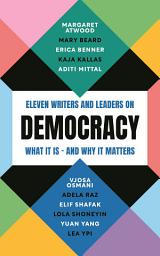
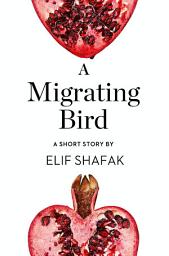
Is there a character or story line within your own writing that you feel closest to?
This is a tough question, mainly because I would struggle to select just one book, or one particular character. As a novelist you have to connect with each and every character in the book, even the ones that might not seem to be likeable at first glance.
However, I can say that I enjoyed inventing "King Arthur of the Sewers and the Slums," and this imaginary personality is loosely inspired by an actual historical figure, George Smith — a Victorian era genius who decoded the cuneiform clay tablets in the British Museum, including the Flood Tablet of the Epic of Gilgamesh. He is a fascinating mind and I wanted to honour this remarkable human being.
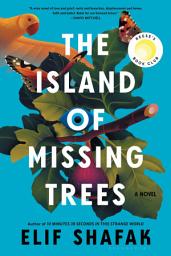
I also very much enjoyed writing "the Fig Tree” —ficus carica-- in The Island of Missing Trees. It was a risk to make a tree talk in a literary novel but I heard her (it is a female voice) voice inside my head, day and night, and I believed in this voice and took the risk.
However, I can say that I enjoyed inventing "King Arthur of the Sewers and the Slums," and this imaginary personality is loosely inspired by an actual historical figure, George Smith — a Victorian era genius who decoded the cuneiform clay tablets in the British Museum, including the Flood Tablet of the Epic of Gilgamesh. He is a fascinating mind and I wanted to honour this remarkable human being.
I also very much enjoyed writing "the Fig Tree” —ficus carica-- in The Island of Missing Trees. It was a risk to make a tree talk in a literary novel but I heard her (it is a female voice) voice inside my head, day and night, and I believed in this voice and took the risk.
What books with strong female protagonists did you read as a young girl that inspired you to become the novelist you are today?
Books were companions, my friends from an early age onwards. I was raised by a single working mother in a very patriarchal environment and as an only child I was alone for long stretches of time. I thought life was very boring and it was literature that helped me to go beyond, connecting me with other worlds, other possibilities beyond my little corner of the universe.
So many female protagonists have left a big impact on me from an early age onwards. Jo March in Little Women — she was fierce, independent, and a writer. I loved her. Equally, Shehrazad in 1001 Nights, the storyteller. She showed me the power of words and imagination. Then of course Elizabeth Bennet, in Jane Austen’s Pride and Prejudice —witty, spirited. Jane Eyre by Charlotte Bronte. But then again, I loved Dulcinea, even though she was a dream.
So many female protagonists have left a big impact on me from an early age onwards. Jo March in Little Women — she was fierce, independent, and a writer. I loved her. Equally, Shehrazad in 1001 Nights, the storyteller. She showed me the power of words and imagination. Then of course Elizabeth Bennet, in Jane Austen’s Pride and Prejudice —witty, spirited. Jane Eyre by Charlotte Bronte. But then again, I loved Dulcinea, even though she was a dream.
What is the best piece of advice you have for aspiring writers?
In everything we do, love has to be our guiding force. You have to ask yourself, ‘Do I love what I am doing? Do I love the art of storytelling?’. If the answer is yes, please do not give up. I believe we writers need to be two things all our lives: good readers and good listeners. Let's keep reading, everything and anything that speaks to us, and let’s read widely, not just one type of genre, one discipline. Also I believe we need to listen well— to people, to nature, to rivers, to trees, to stones, and to “others”, people who might seem to be different than us at first glance.
What’s your all-time favourite book?
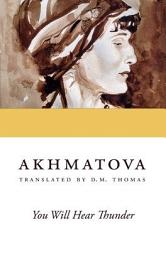
I have so many, but always Don Quixote will have a special place in my heart. Then Virginia Woolf’s Orlando. Walter Benjamin, Rumi, Hannah Arendt, Federico Garcia Lorca, Ursula K Le Guin, Doris Lessing, Toni Morrison, James Baldwin, Anna Akhmatova, Marcel Proust, Gustave Flaubert, Khalil Gibran…. there are so many authors, I feel grateful to each and every one.
Discover Elif’s top books